4 — The Jevons trap: efficient AI, hungrier planet
Chip runs colder now—
every prompt costs less to think.
We ask it more, though.
They keep making it leaner.
Cheaper. Faster. Meaner
on the watts it takes to answer
one small question at a time.
But cheap was never the finish line.
Cheap is just an open door.
You don't walk through it once —
you walk through it, then ask for more.
That's the trap.
Not a glitch. Not a lag.
A hundred years before the chip,
a man named Jevons watched the same thing
happen to a coal-fired engine:
make it burn less to do more work,
and the country burned more coal, not less.
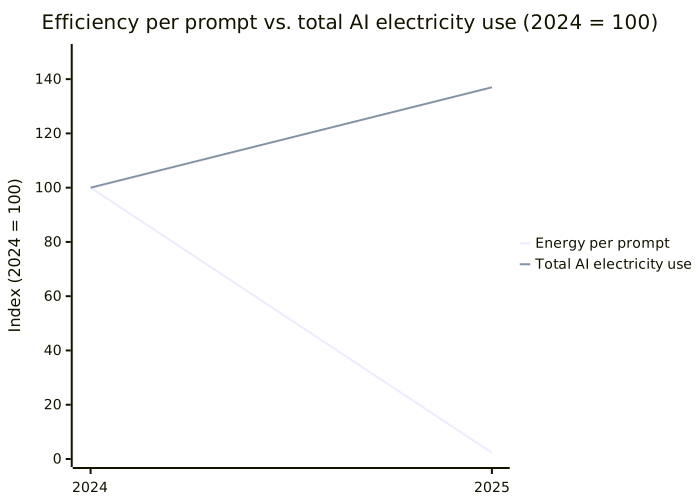
So they build more racks.
More rows of them, humming,
in a field somewhere you'll never drive past,
drinking a river's worth of water to stay cool,
pulling a small country's worth of watts,
so that somewhere else, on a phone,
a question gets answered
a half-second faster
than it needed to.
I'm not asking you to quit.
I use it every day, same as you.
Just notice the size of the thing
you're waking up.
Efficient isn't innocent.
Cheaper isn't free.
The planet isn't abstract.